
Brand Activation at the Edinburgh Fringe: What Actually Works
August in Edinburgh is a different proposition entirely. For three and a half weeks, the city becomes Europe's largest arts festival — more than 3,000 shows, audiences from every corner of the world, and a level of street-level energy that makes it unlike any activation environment in the UK. For brands, the Edinburgh Fringe is both a massive opportunity and a genuinely tricky brief.
We're Social Jungle, an experiential marketing agency based near Glasgow, and we've worked across Scotland's event calendar including Edinburgh activations throughout August. We know what works in this city when it's running at full capacity — and what tends to fall apart on day three.
In this post, we're covering what makes brand activation at the Edinburgh Fringe different from a standard festival brief, which activation formats suit the environment, what to avoid, and how to book with enough lead time to get it right. If you're a brand manager, agency planner, or venue operator thinking about August 2026, this one's for you.
Jump to a section:
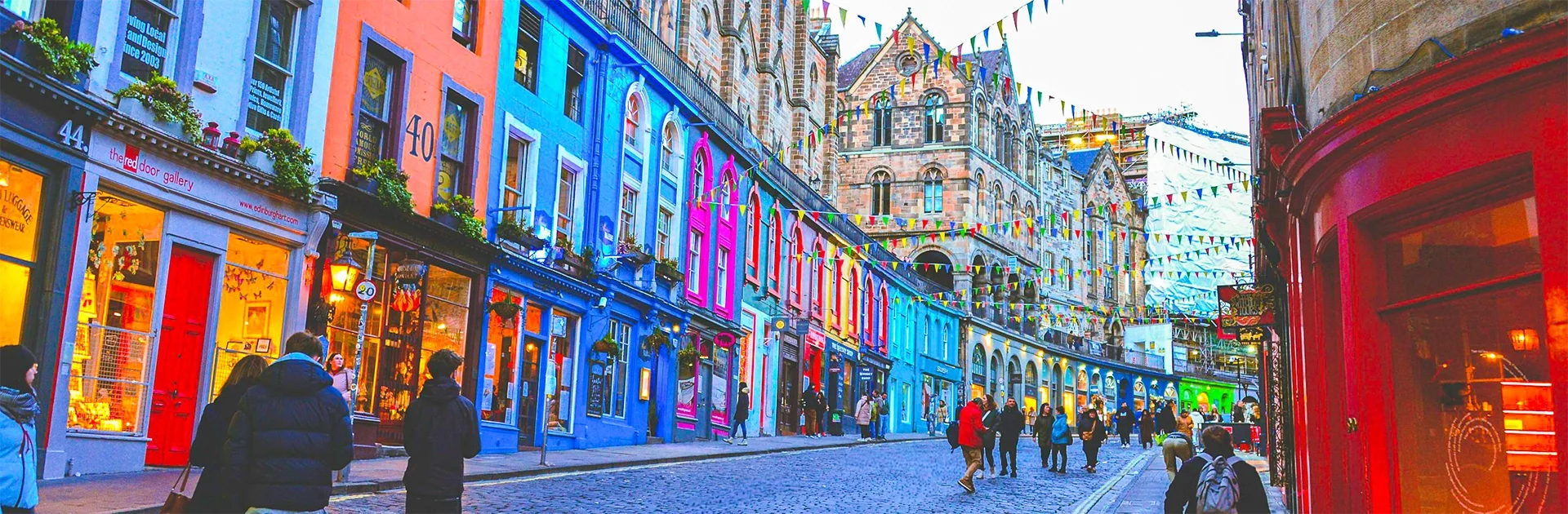
Victoria Street, Edinburgh -- one of the city's most iconic locations during festival season. Photo: Andreea V / Unsplash
Why the Edinburgh Fringe Is Unlike Any Other UK Activation Environment
The first thing to understand about the Fringe is that it isn't contained. There's no single site, no fixed perimeter, no branded wristband entry. The festival spills across hundreds of venues — from the Pleasance and Summerhall to pub basements and church halls — spread across the whole city. Footfall doesn't concentrate at a single point: it moves, it disperses, and it follows the show listings.
That dispersed geography changes everything for activation planning. You're not competing with a headline stage for attention in the way you would at a traditional music festival. Instead, you're operating in a city that's already in a heightened state of cultural engagement. Audiences are primed to discover things. They're moving between venues, browsing the Royal Mile, waiting in queues, or wandering into the Grassmarket at midnight — and all of those moments are activation opportunities.
The other distinctive factor is duration. The Fringe runs for 25 days in 2026, from 7 to 31 August. That's a long time to sustain an activation. Formats that work brilliantly for a single event day can become logistical headaches when they need to run for three and a half weeks straight. Kit reliability, staffing continuity, and throughput all matter more here than at a one-day activation.
And then there's the audience itself — which we'll come to properly in the next section, but it's worth flagging here because it shapes everything else. The Fringe doesn't draw one type of person. It draws everyone. And when an activation lands well with that crowd, it doesn't just reach the people who stood in front of it. It travels.
The Audience: Who You're Reaching at the Fringe
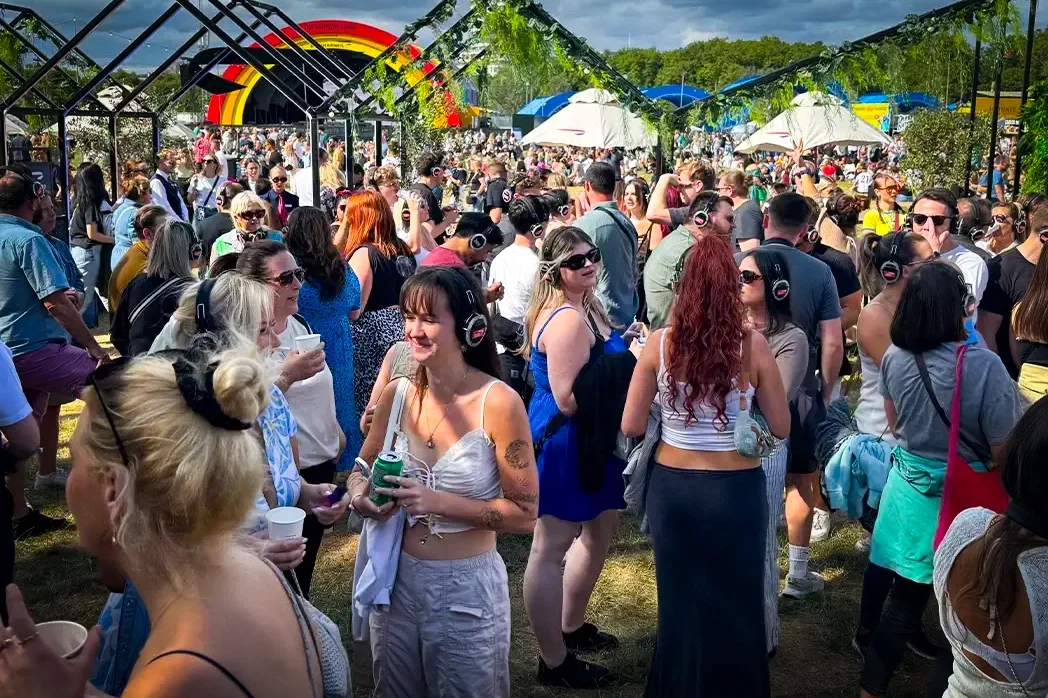
The Fringe audience isn't a single demographic. In the course of a single afternoon on the Royal Mile, you'll encounter school groups, tourists from the US, Japan, and Australia, Edinburgh locals who've been coming for decades, and industry professionals attending shows in their lunch break. That breadth is both a challenge and an opportunity.
What unites this audience is a high level of cultural curiosity and a genuine openness to new experiences. People at the Fringe are already in discovery mode — they came specifically to be surprised, entertained, and engaged. That mindset transfers directly to brand activations. An experience that feels genuinely creative and worth a moment of someone's time will get taken up far more readily here than at a general consumer event.
The strong social sharing behaviour of Fringe audiences is also worth building around. Many visitors document their entire Fringe experience — shows, food, street performances, and unexpected brand moments all end up in the same Instagram story or TikTok. Activations that produce a piece of shareable content — a printed photo, a personalised digital card, a short video clip — give audiences something worth posting. That organic reach extends the brand's footprint far beyond the physical activation footprint.
Activation Formats That Suit the Fringe's Environment
Not every activation format suits the Fringe, and the ones that struggle tend to share the same problem: they were designed for a different environment. The formats that consistently work here have three things in common — they're compact, they move quickly, and they leave participants with something worth sharing.
AI Photo Booths and Photo Booths
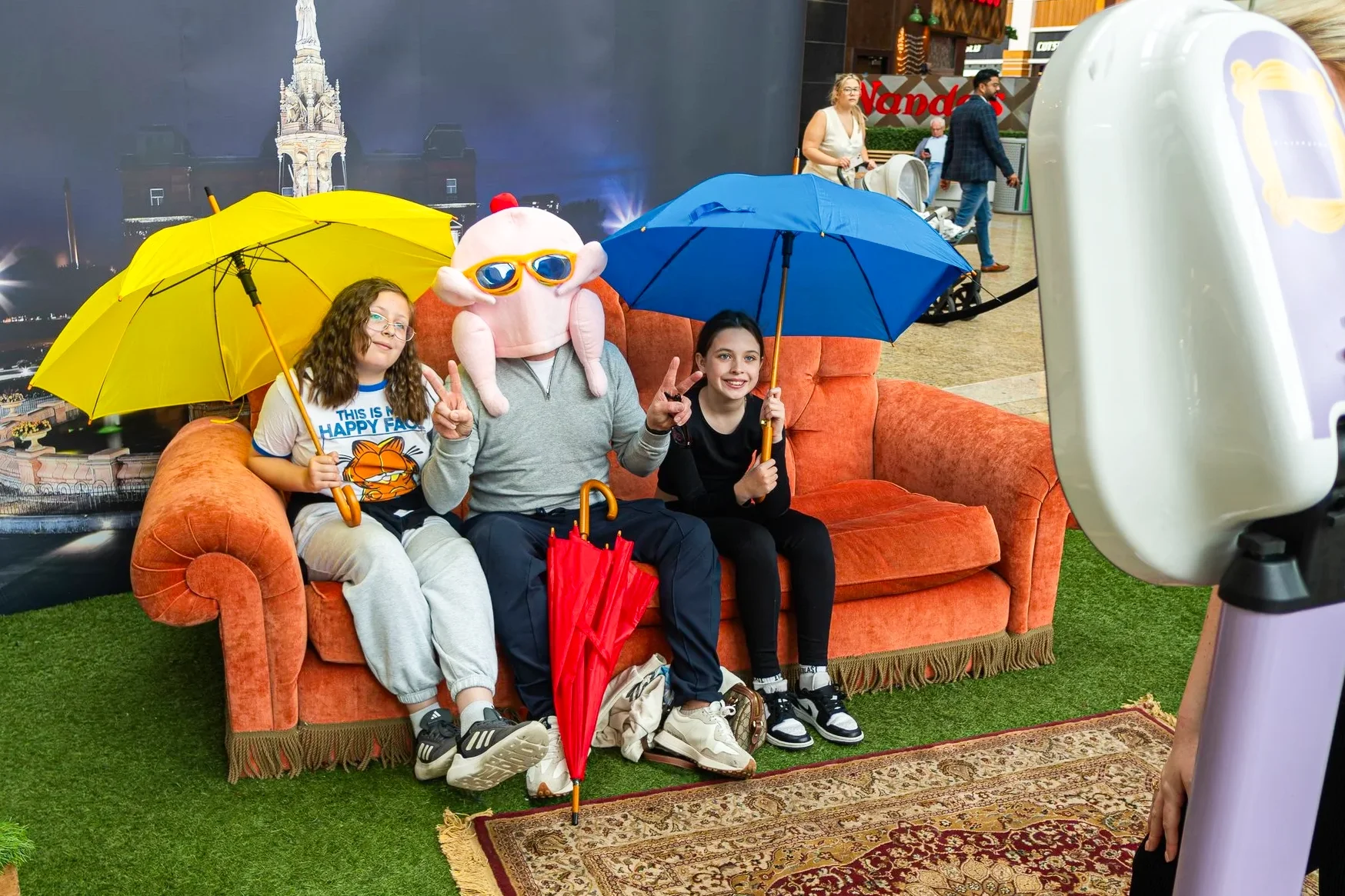
Our AI photo booth and photo booths are consistently strong performers at festival environments because they tick every box the Fringe demands. They have a small physical footprint — which matters when you're working with tight venue spaces or street-level pitches. The experience takes 60—90 seconds from start to finish, so throughput is high even in peak periods. And the output — a branded photo or AI-generated image — is designed to be shared. Visitors leave with content they actually want to post.
Portable, Flexible Formats
The GlamCam — we operate the only one in Scotland — is another format that works well in controlled festival venue settings, producing cinema-quality content that gives brands a premium creative output. For activations with a more interactive game mechanic, formats like Spin to Win work well as engagement drivers for dwell-time-dependent locations: venue foyers, branded pop-ups, and hospitality areas.
Content That Travels
At the Fringe, the best activations are essentially content production machines. Every visitor who walks away with a printed photo, a digital card, or a short-form video becomes a distribution channel. Brands that design their Fringe activation around the content output — rather than just the on-site experience — get significantly more out of their investment.
What to Avoid: Common Mistakes at Festival Activations
The Fringe is unforgiving of activations that weren't designed for it, and the same mistakes come up every year.
The most common is scale. Large-format builds with structural requirements run into problems fast: Fringe venues are often old, oddly shaped, or listed buildings, and street pitches are both competitive and tightly regulated. An activation that fits a 3x3 metre footprint has far more placement options — and far fewer logistical headaches — than one that needs a lorry to arrive at 6am.
Connectivity is the other one. Wi-Fi in festival venues is patchy at best, and 4G drops out in basements and enclosed courtyards. Any activation with a live internet dependency for its core function needs a solid offline fallback, or it needs to be reconsidered before the brief is finalised.
Then there's participation friction. In a high-footfall, high-distraction environment, anything that requires more than a few seconds of explanation will lose people before they've started. The best Fringe activations are legible on sight — you see it, you understand it, you're in. If you find yourself writing a participant briefing longer than two sentences, that's a signal.
Finally, throughput. A five-minute experience with a 50-person queue isn't a success — it's a queuing system with a brand attached. Design for the worst-case traffic scenario from the start, not as an afterthought.
Social Jungle's Edinburgh Credentials
We've been active in Edinburgh long enough to know the difference between a well-planned August activation and one that's been bodged together in July. We provide activation hire in Edinburgh year-round, and the city's summer calendar — particularly the Fringe — is something we plan for properly, not reactively.
That means knowing things that don't show up in a brief: which venue clusters have reliable power, where street pitch applications take longer, how staffing logistics change when you're running the same activation for 25 days rather than 25 hours. The operational picture for a multi-week deployment is genuinely different to a one-day event, and getting it wrong doesn't just affect one day.
Elsewhere in our portfolio, we've handled fan engagement for Rangers FC, Celtic FC, and the SFA, managed activations at national finals and international tournaments, and delivered retail activations at Adidas Battersea Power Station and Livingston Designer Outlet. The brief changes every time. The approach — design for content, plan for throughput, deliver something that actually works on the day — doesn't.
If you're looking for an activation partner who understands Edinburgh as a working environment rather than just a postcode, we're worth talking to. Sooner rather than later.
How to Book an Edinburgh Fringe Activation
With the Fringe running from 7 August, late May is the right moment to be having this conversation. Ten to twelve weeks sounds comfortable, but in practice it goes quickly — particularly if your activation requires a venue liaison process, branded wrap design, or content template build.
Here's what we typically work through before a booking is confirmed: the venue or location (we can advise on placement if you're still exploring options), the activation format, the duration and hours of operation, any branded content requirements, and kit delivery logistics. For multi-week deployments, we also plan staffing rotas and any mid-run servicing requirements.
For Fringe activations specifically, it's worth having a clear brief on your audience objective before you call. Are you building brand awareness with a broad festival audience, or driving a specific outcome — data capture, product trial, social amplification — with a defined segment? The answer shapes the format recommendation.
To get started, get in touch and tell us what you're planning. We'll come back quickly with a format recommendation and availability for August.
Frequently Asked Questions About Brand Activation at the Edinburgh Fringe
Click the ‘+’ to see the answer for each question below.
-
For a Fringe activation running in August 2026, late May to early June is the right window. Ten to twelve weeks gives enough time for venue liaison, branded content design, and kit allocation. Activations requiring custom fabrication or bespoke content builds need the longer end of that window. We'd recommend getting in touch now rather than after July, when availability tightens significantly.
-
Compact, high-throughput formats with a clear shareable content output work best. AI photo booths, standard photo booths, and portable interactive experiences with small footprints are consistently strong performers. The key criteria are: legible in under ten seconds, fast to complete, and designed to produce something the participant wants to share. Large-scale formats with complex setup requirements tend to struggle in the Fringe environment.
-
Yes. We plan for multi-week deployments and handle the full operational picture — kit logistics, staffing rotas, mid-run servicing, and contingency planning. Activations designed to run for 25 consecutive days need a different operational approach to a one-day event, and we build that into the brief from the start.
-
The Fringe doesn't publish official daily footfall figures, but the festival regularly records more than 3 million ticket sales over the run, with additional uncounted footfall from street performances and the Royal Mile. The busiest periods are weekends and the final week of August. Daily footfall at key locations like the Royal Mile and the main venue clusters is substantial throughout the run.
-
It depends on the location. Activations within a licensed Fringe venue are covered by the venue's own permissions, but any street-level or public space activation in Edinburgh will require a licence from City of Edinburgh Council. The process involves an application, insurance documentation, and in some cases a site plan. We can advise on this as part of the planning process — it's another reason to start early.
Plan Your Edinburgh Fringe Activation With Social Jungle
The Fringe is one of the best activation environments in the UK — but it rewards the brands that plan properly and penalises the ones that leave it too late. August 2026 is 10 to 12 weeks away. That's a workable window, but not a comfortable one.
If you're thinking about experiential marketing for Edinburgh this August, we'd love to be involved early. Whether you have a clear brief or you're still exploring formats, get in touch and we'll come back with options.
You can also explore our full range of experiential marketing services, or visit our Experiential Playground showroom in East Kilbride to try the kit before you book.